
Dog training requires patience and dedication from the owner plus some simple methods. It isn't hard, and perseverance will pay off in the long run. First off, positive reinforcement is a top tool for teaching any animal. If your pet receives rewards for their behavior, they'll learn to do the same thing again in similar circumstances. But it doesn't necessarily happen right away. It takes time and repetition for your dog to figure out the pattern of good behavior that leads to a reward. Dogs learn some things quickly, some slowly, and some dogs take a little more time or work than others. So don't be disappointed and keep with it.
Negative reinforcement is heavily debated among animal training experts. Some say that it helps pets learn not to do something in the same way and with the same effectiveness that positive reinforcement works. Others think your pet might develop fear or confuse them. Perhaps it depends on the individual animal or the punishments used. With research maybe you can form your own opinion on the matter.
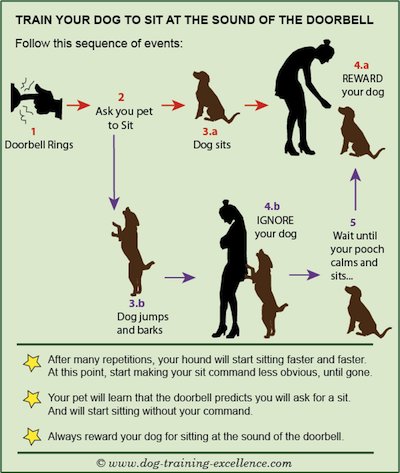
One common problem for some dog owners is jumping; and it's one of the most annoying habits a dog can have. Some dogs do it as a greeting, some to beg for food or attention. It's not easy to correct this behavior sometimes, but it is important. If your dog jumps up on a small child, they could easily hurt them.
One way lots of people have used to stop their dogs from jumping up is by distracting them, by throwing treats on the floor for example, and then greeting them while they're distracted by the treats. This doesn't help if your pet is begging, but it can work to stop a greeting-related problem.
Another method of training to prevent jumping is to greet your dog calmly when you arrive, and when he jumps up, turn your back on him. Once your dog puts all four feet back on the floor, then turn around and give him attention. Any time your dog jumps up on you, turn your back on him and refuse to pay any attention until he stops being annoying. This method can take a while for your dog to respond to, so be patient and don't give up. You can go further by teaching your dog to sit before he will get any attention.
Start with the basics and don't try to teach your dog too much at once. Your pet isn't as intelligent as you, so introducing one command at a time is your best bet, especially if the commands are completely unrelated. Imagine trying to learn three or four different languages at a time--you'd be sure to get confused.
It can be tough training your pet but with a little time each day and most importantly, patience and perseverance, you and your pet can share a rewarding experience together.
No comments:
Post a Comment